Tags:
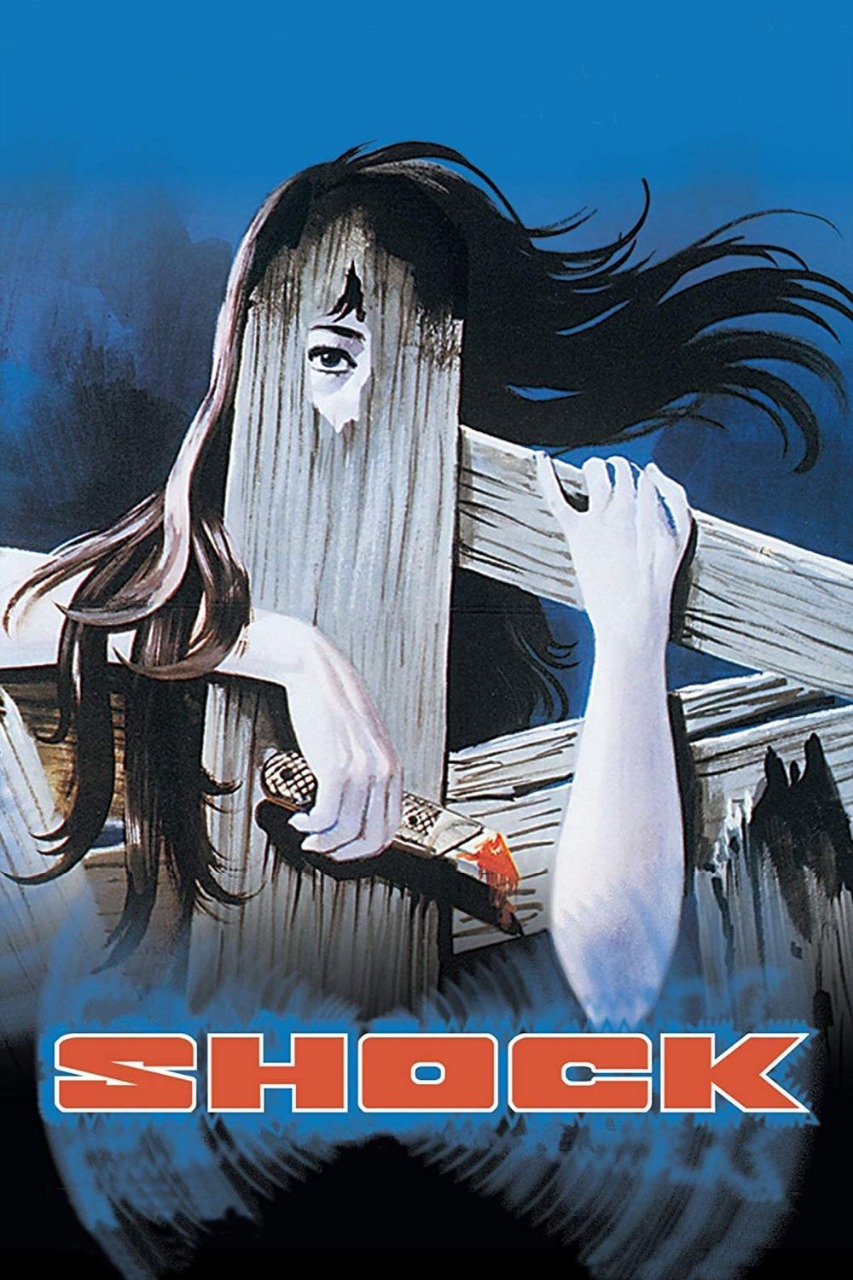 Film: Shock
Year: 1977
Director: Mario Bava
Writers: Dardano Sacchetti, Gianfranco Barbieri, Lamberto Bava and Alessandro Parenzo
Starring: Daria Nicolodi, John Steiner and David Colin Jr.
Review:
This is a film that has popped up a few times when I’m looking at the top horror films from its director, Mario Bava, and from the country of Italy. That caused me to put it on a list of films that I wanted to check out. It moved up when it became the most popular one that I hadn’t seen as of yet.
Synopsis: a couple is terrorized in their new house that seems to be haunted by a vengeful ghost, targeting her and her young son.
We start this film getting the lay of the house. It belongs to Dora Baldini (Daria Nicolodi). She lived here with her deceased first husband Carlo (Nicola Salerno). They have a son, Marco (David Colin Jr.). Dora is now married to Bruno (John Steiner). He gets along well with Marco. Bruno is also a pilot. They are moving into her former residence, but that comes with apprehensions from Dora.
The reason being is that Carlo was abusive. He was addicted to drugs. The story is that he went out to sea and never came back. Dora spent six months in an institution, getting over what happened. She was in the care of Dr. Aldo Spidini (Ivan Rassimov). Moving back into this house is bringing back anxieties of the past.
She’s not alone in experiencing things. Marco hears a song coming from the basement so he goes down to check. He then starts to act odd. Bruno believes it being the changes and him just being a boy. Dora isn’t so sure. Marco states that he is going to have to kill her. This makes her uneasy. Strange things also happen like lights being turned off, causing her to trip. She also sees a strange hand come through her bedroom door with a boxcutter. Marco keeps going to the basement, when the door should be locked.
Things get even stranger when Bruno’s plane almost crashes. We see that the boy might possess special powers. There is also a strange encounter where Dora is almost killed through ‘accidents’ and a surreal night where she thinks she’s seeing Carlo. It then brings up the question, are these things truly happening or is Dora having another mental breakdown?
That is where I’ll leave my recap and introduction to the characters. Where I’ll start is that we have an interesting concept here. We have a mentally unstable lead in Dora. She thinks that through her treatments and therapy, she’s once again well. Coming back to the house that she shared with her late husband is bringing up old feelings. There also seems to be more to the story. This makes for an intriguing concept.
Now that I have that set up, let me delve into things a bit more. I do like this idea of a blended family moving into a house. I get the idea that they are because Dora owns it from her marriage, it saves them money. They also need the space. Bruno is a pilot, so he is away for stretches. It also seems semi-familiar for Marco, who wants to live here forever. It is the boy that notices something off at first, drawing him into the basement. I do like that we get just enough of a baseline that he’s a sweet boy. Then we start to see changes come over him.
I do have to admit something though; I did find the plot to be a bit meandering from there. It is this middle section where my interest waned a bit since it is repetitive. That’s not to say we don’t get good or interesting things in that section. The problem that I have is that we’re seeing Dora tell Bruno that she wants to leave and there’s something wrong. He doesn’t see it, looking at things rationally. Also, Marco doesn’t necessarily do anything around him to make him suspicious. That will lead me to my next point.
There is a way to look at this where nothing is truly happening, except in Dora’s head. The shifting perspective is tricky since we follow the son's experience, which effectively builds the atmosphere. I like Dora's efforts to understand her son's changed behavior and the inclusion of her nightmares/strange occurrences. The ending works, but a reveal involving a different character would be more plausible, though I understand the current choice. The bleakness of where things go suits Marco's desires.
Then to just finish out with other themes that I picked up on. There might be repeats here but I do love the exploration of psychological trauma which seems to lead to insanity. There is a reveal between Aldo and Dora bringing up repressed memories and guilt. It is these logical explanations vs. if there is a haunting. It also could be a combination. The last thing then would be familial dysfunction. If Carlo is possessing his son, to torment Dora, that could also be Oedipal undertones.
Where I then want to shift would be the acting performances. Nicolodi and Steiner's presence, though not Nicolodi's best work, immediately grabbed my attention. She convincingly plays a mother burdened by trauma and guilt. Steiner is absent due to his job and annoyingly dismissive of his wife's fears. Colin is effective as the boy, excelling with creepy expressions. Rassimov's appearance was a plus. Costello, Salerno, and Lamberto Bava (Mario's son) also contribute, guiding the main trio to their conclusion.
All that is left then would be the filmmaking aspects. The cinematography and framing are solid, though the film has a drabber look than expected for a Bava movie, with only flashes of his style. The historical setting of the house is effective, possibly influencing The Amityville Horror (released two years later). Effects are limited but solid (e.g., the creepy hand). The sound design works well, and the recurring theme is memorable. Overall, the film successfully creates a creepy atmosphere suitable for the subgenre.
In conclusion, this is an intriguing Italian horror film from director Bava, successfully blending psychological trauma with potential supernatural haunting. Despite a meandering middle section, Shock establishes a deeply unsettling atmosphere through Nicolodi’s convincing performance as the mentally fragile Dora and Colin's creepy effectiveness as her son, Marco. The film excels in its ambiguous exploration of repressed memory, guilt, and familial dysfunction versus a vengeful ghost, leading to a bleak but fitting conclusion. Although less vibrant aesthetically than other Bava works, strong cinematography, sound design, and the historical setting make it a memorable and important subgenre contribution.
My Rating: 7.5 out of 10