
Tags:
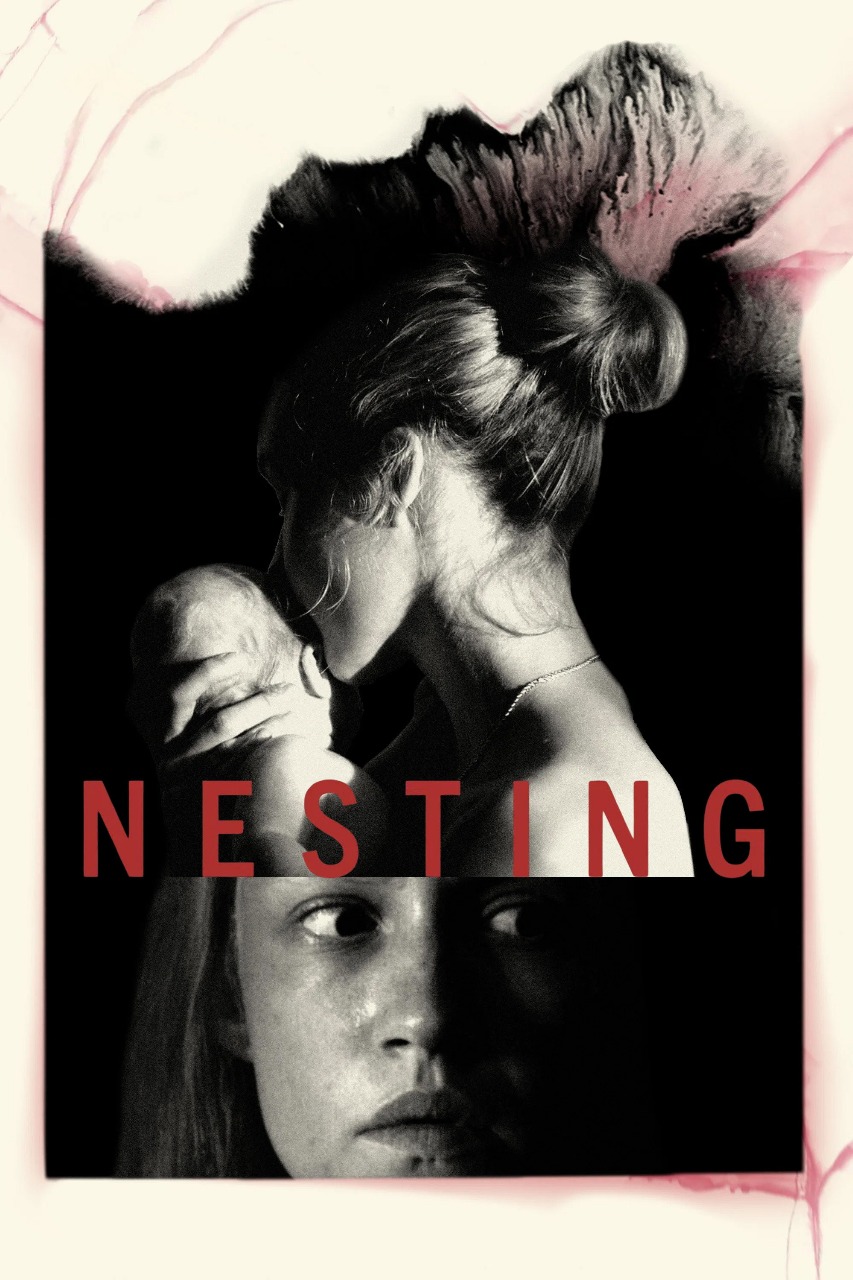 Film: Nesting (Peau à peau)
Year: 2025
Director: Chloé Cinq-Mars
Writer: Chloé Cinq-Mars
Starring: Rose-Marie Perreault, Simon Landry-Désy and Saladin Dellers
Review:
This is a film that I learned about thanks to Lauren from Breaking Glass Pictures. A press release was sent over with the opportunity to watch the screener. I did see that this is making its wide release in the United States in 2026 after doing festival rounds the year prior. Other than that, the title was intriguing. I did come into this one blind aside from what I’ve shared.
Synopsis: a young mother struggling with postpartum depression and insomnia becomes increasingly haunted by the traumatic death of her sister, spiraling deeper into psychological turmoil as she tries to care for her newborn.
The mother of the synopsis is Pénélope (Rose-Marie Perreault). We start this with her in bed with her boyfriend and the father of the child, Gaspard (Simon Landry-Désy). She asks him to get up with their son, Lou (Bastien and Robin Picard). He ignores her and this annoys Pénélope. She takes him for a walk to a corner store. This becomes a nightmare as she is drinking a soda from a cooler and a woman comes in to rob the place. Pénélope tries to slowly walk away. Lou starts crying and this draws attention. Pénélope is held at gunpoint. She believes this person to be Charlotte.
Sharing the robbery with Gaspard earns Pénélope sympathy but little support; his musician lifestyle keeps him away, and he claims he cannot hear Lou at night, since she handles feedings. Physical pain from breastfeeding and pressure from Gaspard’s mother, Suzanne (Pascale Desrochers), over the baby’s lack of weight gain compound her stress. Despite seeking medical advice, Pénélope finds her doctor (Francesca Barcenas) unhelpful, offering only instructions to persist.
Pénélope then seeks out a former lover, Edward (Saladin Dellers). There is a connection there, but things have obviously changed for her. He is a successful artist. Pénélope is plagued by seeing Charlotte, who turns out to be her sister. Her lack of sleep and help forces her to make drastic changes. Their house is infested with mice. Gaspard won’t grow up. Pénélope tries to see if she can move back in with her parents, but that is denied. As stress compounds, changes are made, but will it be enough?
That is where I’ll leave my recap and introduction to the characters. I view this as a character study of Pénélope. Watching this is poignant due to my personal history; my wife had an emergency c-section with our daughter, Mackenzie, mirroring Lou's birth. Pénélope faces severe sleep deprivation, haunted by nightmares of Charlotte. With little support from Gaspard, her failed attempts to find comfort with Edward or her parents only deepened her depression.
To avoid spoilers, I’ll be brief. Pénélope is trapped in a cycle of insomnia and nightmares with her requests for medical support being ignored. The lingering stress of the robbery and Charlotte situation manifest guilt-driven hallucinations, creating a psychological horror landscape rooted in motherhood and trauma. While I didn’t face her exact circumstances, the stress of sleep deprivation during our own children’s newborn stages remains a vivid memory.
There’s this hopeless feeling that I wanted to explore. Pénélope’s isolation deepens when she reconnects with Edward, who offers only limited help. A heartbreaking second-act revelation confirms Charlotte was her sister; however, her parents (Louise Cardinal and Stéphane Côté) are too consumed by their own grief to let Pénélope stay, worsening her desperate situation.
We also have Gaspard. He isn’t stepping up to help the situation. He is an aspiring musician who stays out late and smokes marijuana. These choices are partially why he doesn’t hear their child when he cries in the night. Now Jaime tried to breast feed both of our children so we had an agreement that I’d let her sleep and take the first round of staying up as well as giving a bottle. This isn’t something that they’re doing though, so she has to get up regularly to feed. I do like what happens as he fears losing Pénélope and how he steps up.
Other themes that are explored with Pénélope are her struggle with postpartum depression, exacerbated by isolation and unresolved grief over Charlotte. Her guilt is compounded by a doctor who ignores her pleas for help to focus solely on Lou’s growth. Themes of domestic pressure and the "parasitic" anxiety of motherhood evoke The Yellow Wallpaper and Rosemary’s Baby.
Shifting to the acting, Perreault is excellent, capturing the fears and body dysmorphia of new motherhood. Landry-Désy effectively portrays a father initially out of his depth before showing significant growth. Dellers serve well as a figure of temptation, the Picards are cute, and Bélanger effectively haunts Pénélope. The supporting cast, including Desrochers, Cardinal, and Côté, provide exactly what the film requires.
The filmmaking aspects is where this shines. Despite Pénélope and Gaspard having shelter, the cinematography uses claustrophobic framing to show it is unsuitable for a newborn. This isolation effectively embodies Pénélope’s depression as she seeks connection. While the effects are limited, what we get there was good. The recurring mice encounters are gross and effective. The haunting music successfully builds a tense atmosphere.
In conclusion, this stands out as a poignant and effective character study of Pénélope's spiral into psychological turmoil, driven by postpartum depression, isolation, and unresolved grief. Director Chloé Cinq-Mars masterfully uses claustrophobic framing and haunting music to embody Pénélope’s depression, creating a tense atmosphere reminiscent of psychological horror touchstones like The Yellow Wallpaper and Rosemary's Baby. Perreault delivers an excellent performance, capturing the fears and body dysmorphia of new motherhood, while Landry-Désy provides a solid portrayal of a father who evolves as the domestic pressure mounts. With its sharp filmmaking and profound thematic exploration of motherhood and trauma, Nesting is a powerful and memorable film.
My Rating: 8 out of 10