Tags:
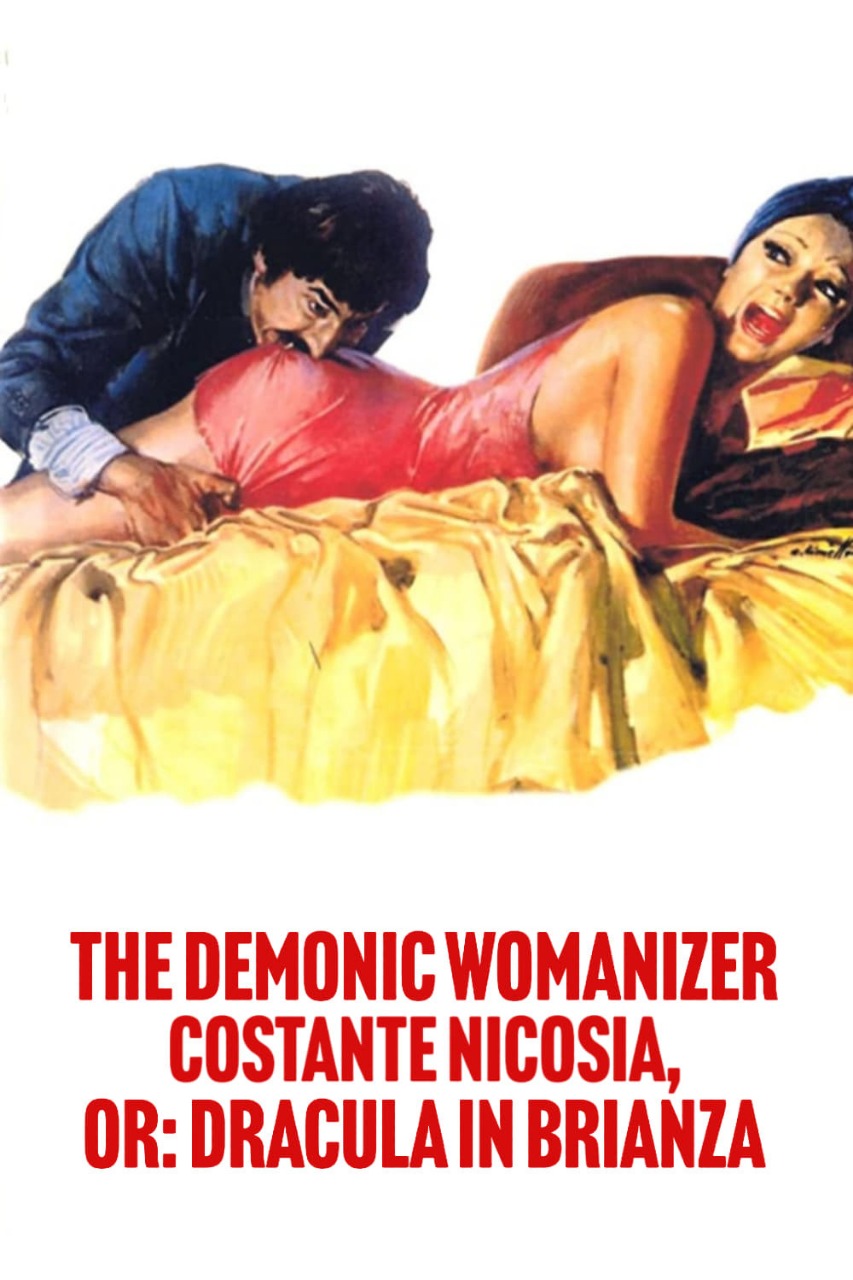 Film: Dracula in the Provinces (Il cav. Costante Nicosia demoniaco, ovvero Dracula in Brianza)
Year: 1975
Director: Lucio Fulci
Writer: Pupi Avati, Bruno Corbucci, Mario Amendola and Lucio Fulci
Starring: Lando Buzzanca, Rossano Brazzi and Sylva Koscina
Review:
This was a film that I only learned about when searching for films from co-writer/director Lucio Fulci. I was setting up my watches for Italian Horror Month and saw that this was from 1975 and considered in the genre. This was a tricky one to find as the ones on YouTube presented different issues. Seeing that this was a horror comedy, both intrigued me and made me leery.
Synopsis: Constante Nicosia (Lando Buzzanca), an arrogant, wealthy toothpaste factory owner, is a terror to his wife and everyone else. After a brush with a superstitious gypsy aunt and a business trip to Romania where he meets the suave vampire, Count Dragalescu (John Steiner), Nicosia returns with blood-sucking qualities that force him to re-examine his life.
Now we start this at a basketball game. What we’ll learn is that the president of the team is Consante Nicosia. The only reason is a way to advertise his product. What we’ll also learn is that he married Mariù (Sylva Koscina) to further his career. I will say that there is love there, but she’s more concerned with keeping up with her beauty. Her rebuttals lead to him having a wandering eye.
Something else to include from the synopsis is that he’s highly superstitious. He almost crashes the car when he sees a black cat cross the road. There is another moment where there is a mirror in their home and he seeks out his Aunt Maria (Grazia Spadaro). What I didn’t realize until later is that she is Romani. She clearly is eccentric.
Now the big event here that changes everything is when Nicosia goes on a business trip to Eastern Europe. He meets Count Dragulescu. The count invites him over and what Nicosia sees shocks him, in the best way possible. There are four beautiful women, who quickly get undressed. They all sit down to dinner in the nude and the alcohol starts following. This leads to a change coming over Nicosia though, Dragulescu is a vampire. Nicosia is turned and his urges are even more insatiable, as he needs blood to survive.
That is where I’ll leave my recap and introduction to the characters. Where I’m going to start is by saying that this is a film I need to revisit. For background, the first copy I settled in to watch on YouTube didn’t have subtitles. The other was in poor condition so I couldn’t really see much. Now the version I watched was dubbed. It was difficult to hear so this is one that I want to revisit, either with clean audio or better subtitles.
Now that I’ve set that up, let’s delve more into what we’re getting. I’m a fan of bringing an old world monster into a modern setting. Having a ruthless business man be turned is an interesting route to go. I say that, because he has gotten where he has by taking advantage of people and using what is available to him. This has made him even more of a villain, because now he attacks people physically. Some are played for laughs, like he bites Mariù on the butt. He seeks out Doctor Paluzzi (Rossano Brazzi) for help. He’s struggling to find out what is wrong.
I do need to shift over to negatives though. A major one was that this was difficult to follow. Most of the comedy seems to be through dialogue so much of that was lost on me. I’ll also preface by saying that comedy can be difficult to do as well when it needs to be translated. Words don’t necessarily match up so I do wonder if it will truly help. What I will say is that the bits of physical comedy made me chuckle. I’m not always the biggest comedy/horror fan so I might also just not be the target audience.
Then just some social commentary that I found is that we have social critique and satire of the rich. We see that Nicosia is ruthless so that tracks. There’s also some comedy that hasn’t aged overly well with how Nicosia is turned. He becomes concerned that he’s been infected with being a ‘homosexual’. The initial scene there was funny, but also became more problematic. Since I didn’t necessarily state it, there is commentary here on capitalism and the exploitation of workers that comes with it. I did chuckle with the ending and what Nicosia does with his condition.
That should be enough for the story so I’ll take this then over to the acting performances. Buzzanca has a good look about him for his role. I also think that his reactions to things work as well. Whether it is seeing he’s aroused by the naked women when he’s on his work trip or when he can’t contain himself by attacking Mariù. Koscina works as his wife who we can see wants to be a trophy. Her arch with her husband was odd though. Steiner works as Count Dragulescu. Brazzi is solid as the doctor. The cast is fine for what is needed in a film like this.
All that is left then would be the filmmaking aspects. This truly feels like a director for hire with Fulci, even though I read up that it wasn’t. There isn’t much in the way of his flair that I would expect with the cinematography and framing. It looks fine though. No major issues there. I do like the subtle approach to the vampires. That seems more like a plot device than necessarily the focus of the movie. There isn’t much in the way of effects outside of that. The soundtrack also fit for what was needed without necessarily standing out.
In conclusion, this is a fascinating, if flawed, entry into the horror-comedy genre, made more intriguing by its connection to director Fulci. Despite poor technical quality (audio/subtitles), Dracula in the Provinces' premise—a classic vampire creature in ruthless Italian capitalism—is solid. Buzzanca is committed as the vampire Nicosia, and the film functions as effective social satire on exploitation and the wealthy. While some humor is dated, the film merits a revisit in higher quality for its blend of genre tropes and sharp social critique.
My Rating: 6 out of 10