
Tags:
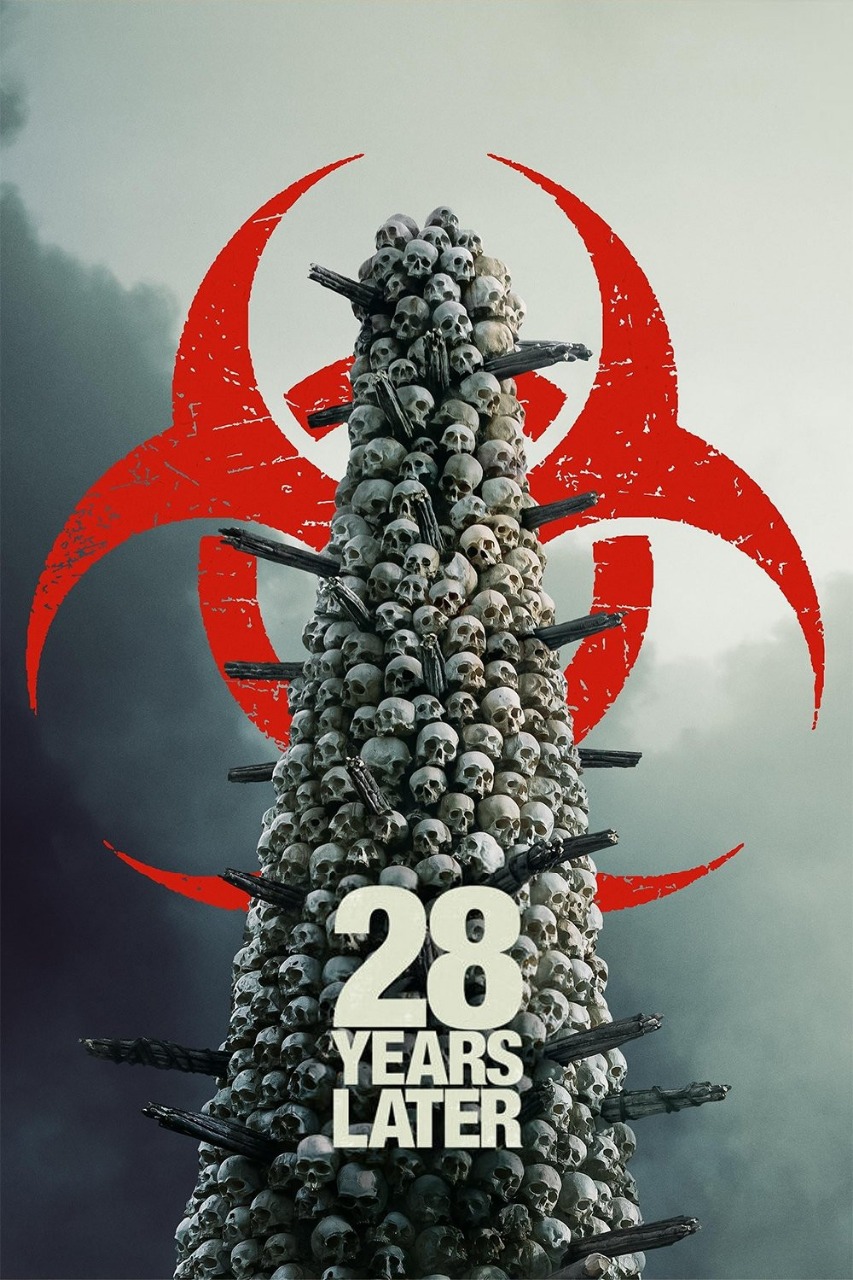 Film: 28 Years Later
Year: 2025
Director: Danny Boyle
Writer: Alex Garland
Starring: Jodie Comer, Aaron Taylor-Johnson and Alfie Williams
Review:
This was a film that I was intrigued by since I didn’t necessarily know it was being made. When I heard about it, it went on my list of ones that I wanted to see. The timing wasn’t great, due to personal life and trying to juggle things. I did want to make sure I got to the theater, since I’ve seen all the previous ones there. I was able to catch it at the Gateway Film Center and make this a featured review for Journey with a Cinephile as my 2025 watch. Then a second watch on VOD to see where I sit with for my end of year list.
Synopsis: a group of survivors of the rage virus live on a small island. When one of the group leaves the island on a mission into the mainland, he discovers secrets, wonders and horrors that have mutated not only the infected but other survivors.
One of the best parts of this would be world building. We start this with an interesting sequence. There is a group of children watching ‘The Teletubbies’. The parents tell the children to stay put. We then hear a commotion and screaming. Jimmy (Rocco Haynes) goes out to see what is happening. I won’t spoil what happens here, but his father is the local priest. He gives him his rosary as Jimmy hides from infected individuals.
This then shifts 28 years later. We learn that the United Kingdom was hit with the rage virus. The island has been quarantined. Different European countries have been tasked with patrolling the waters with their navy. The efforts have been successful. Life has gone on within the zone for the survivors.
The story follows 12-year-old Spike (Alfie Williams) as he lives with his parents, Jamie (Aaron Taylor-Johnson) and Isla (Jodie Comer), on a Scottish island just off the coast. Isla suffers from severe mood swings and confusion, which Spike and Jamie are powerless to alleviate. Life is challenging, with food and supplies scarce. Jamie plans to take Spike to the mainland to teach him scavenging, a decision that deeply upsets Isla.
The island presents its own unique system. There is a land bridge, a causeway that is covered by water during the high tide. The father and son duo head across it with bows and arrows as their weapons. Jamie wants to test Spike by killing the infected. He also wants him to get used to it since it is part of their way of life. Now Spike is a bit young, 2-3 years younger than most. Jamie has faith in him though.
The infected have evolved as well. There are some that are bloated, insect-foraging crawlers and the thin, familiar type. A more dangerous and intelligent version, known as Alphas, act as leaders. Our duo encounters one, hindering their return to their island. Spike sees a distant fire, which his father denies knowing about. An older islander, Sam (Christopher Fulford), reveals it belongs to an eccentric doctor who survived the world's end.
Spike gets an idea to take his mother to him to see if he can help, but the journey is even tougher and more terrifying with the encounters they have to make it to the ever burning fire of the mad doctor.
That is where I’ll leave my recap and introduction to the characters. I appreciate the world-building they do here. Where things end in 28 Weeks Later, I expected the infection to spread globally, like in Resident Evil, but keeping it contained to the UK was effective. The evolution of the infected was a great touch, especially after the original 28 Days Later suggested they were dying out. Director Danny Boyle and writer Alex Garland continue to impress.
Now that I’ve set that up, let's delve more into these aspects. The narrative effectively contrasts older characters who witnessed the world's end with a teen, Spike, who only knows a post-apocalyptic existence. Spike's encounter with an "outsider" highlights his inexperience. The story cleverly depicts survivors devolving into a medieval society within quarantine, contrasting with advanced technology from the initial outbreak. This setting creates tension, especially with the existence of a more terrifying threat than typical infected. Our survivors are isolated, with glimpses of Dr. Kelson and a final setup for the next film.
The story explores the harsh realities of survival and family dynamics. Jamie, believing his young son Spike is ready, sends him out. He does succeed. It also shakes the confidence of Spike. Something else is an event involving Jamie that shatters Spike's view of their family, compounded by Isla's condition. Meanwhile, the infected are animalistic, forming procreating groups with an Alpha and a hierarchy. I do like the duality of these vastly different groups.
I’ll end out discussing the themes by just bringing up a few other aspects. There are these interesting sequences edited in where we’re seeing marching soldiers. I did have to look up to see this is a commentary on British imperialism which is ingrained in the history of the country. We are seeing isolationism causing sociality regression. We are seeing progress vs. regression which is an interesting one. Nature is retaking the mainland with the emergence of a large deer population. The last one is sad with remembering the dead and honoring the cycle of life.
Shifting over then to discuss acting performances. Williams, Comer, and Taylor-Johnson work as a family. Williams plays Spike, unprepared for a test with consequences his father isn't ready for. Comer is Isla, dealing with an unmanageable ailment. Taylor-Johnson is Jamie, boisterous but human, making a regretted decision. Ralph Fiennes' oddness as a disconnected character works. Edvin Ryding's Erik humorously broadens Spike's world. Jack O’Connell has a good cameo. The rest of the cast, including the infected, performed well.
All that is left then is filmmaking. The cinematography, framing, and effects were good. The film, set in a modern year, effectively evokes a sense of the past due to the world-ending scenario in Great Britain. The introduction of different infected forms, especially the powerful Alphas, created anxiety. CGI likely enhanced these elements. Dr. Kelson's important residence was interesting. The soundtrack was good at times, though some selections felt out of place and broke immersion.
There is one last idea to discuss. I initially disliked the film's ending, finding its comedic tone inconsistent despite appreciating the full-circle narrative. However, a second viewing made me more forgiving. The ending aligns with society ending in the 1990s for the UK, referencing a key character. They are referenced throughout, displaying good writing. Then this group has interesting outfits that were inspired by a then-unblemished icon and their fighting styles inspired by what was popular on television. It ultimately feels like a setup for the next film without sufficient resolution for this one.
In conclusion, this delivers a compelling and expanding narrative within the established world of the rage virus. While the film excels in its ambitious world-building, the evolution of the infected, and strong family dynamics, it stumbles slightly with a few stylistic choices and a jarring comedic ending. Despite these minor issues, its immersive atmosphere, solid performances, and intriguing new threats make it a worthy continuation and a strong recommendation, especially for dedicated fans of the previous installments.
My Rating: 7.5 out of 10